On March 25, 2026, the United Nations adopted a landmark resolution recognizing the transatlantic slave trade and the enslavement of Africans as one of the gravest crimes against humanity. It was a moment that brought global attention back to one of the darkest chapters in human history. But recognition alone is not the full story.
Because if we are going to understand slavery not just emotionally, but historically we have to be willing to look deeper. And that means asking a difficult question: Were all systems of slavery the same?
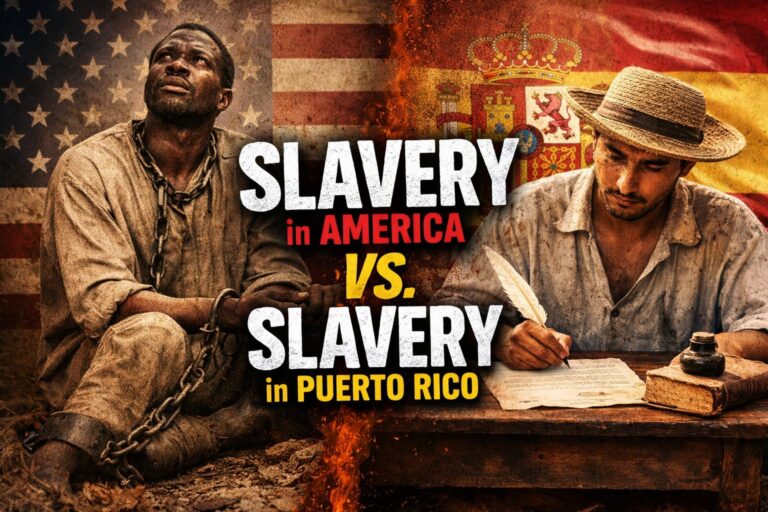
Slavery existed both in the United States and in Puerto Rico under Spain. That is a fact. But the way the law treated enslaved people in each system reveals a difference that most people have never been taught.
In 1857, Dred Scott stood before the Supreme Court in the case of Dred Scott v. Sandford. He argued for his freedom. The Court responded that he had no right to even bring the case. Because in the eyes of the law he was not a person. He was property.
Let that sink in.
Now shift your focus to Puerto Rico under Spain. Slavery existed there as well. There was suffering and there was abuse. But the legal system told a different story. Under Spanish law, enslaved people, while still considered property, were also recognized as human beings within a legal framework. And that recognition made a difference.
This was not just theory. It was lived reality with real people. In Puerto Rico’s historical records, we find enslaved individuals like Mariano, documented as coartado, meaning he was in the legal process of purchasing his freedom. Mariano was not invisible. His name was recorded. His status was tracked. And he was moving through a system that, however limited, recognized his ability to work toward liberty through the law.
We also find individuals like Concepción in Lares, an enslaved woman whose path to freedom came through negotiation under legally recognized conditions. Her situation reflects a system where enslaved individuals could engage, challenge, and navigate their circumstances within a legal structure.
These were not isolated stories. By the time slavery was abolished in Puerto Rico in 1873, thousands of enslaved individuals were already in similar processes through coartación, negotiating, documenting, and working toward their freedom within the legal system.
So understand this clearly. In the United States, an enslaved man went to the highest court in the land and was told he had no voice.
In Puerto Rico under Spain, enslaved individuals like Mariano and Concepción entered legal records, engaged with authorities, and were recognized by the law, even if only partially.
This does not make slavery just. It does not erase the suffering. But it reveals something critical. One system silenced the enslaved completely. The other, however limited, allowed them to speak.
I am Edwin Ortiz, and this is the National Puerto Rico and Spain Initiative.