
Every generation reaches a moment when fear tries to disguise itself as reason.
A moment when people mistake change for danger, and when those who are different are portrayed as threats rather than as bridges toward understanding.
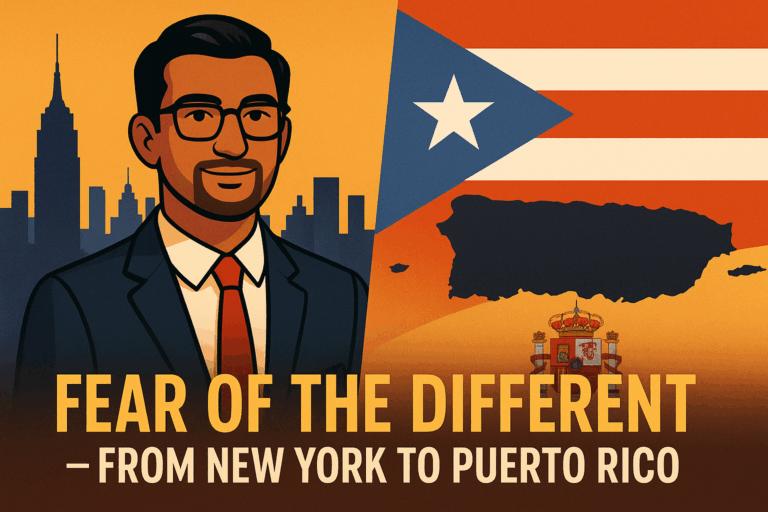
Today, that fear has found a new target: Zohran Mamdani, the newly elected mayor of New York City.
The first Muslim, Ugandan-born, Indian-American to hold the position, Mamdani represents the diversity that defines the city itself. Yet his election has triggered an avalanche of hate, ignorance, and ideological attacks. Some have labeled him a terrorist, a socialist, or a danger to society—not because of his actions, but because of his faith and background.
We’ve seen this before.
When John F. Kennedy ran for president in 1960, many claimed a Catholic could never lead America without taking orders from the Vatican.
When Barack Obama emerged in 2008, they said a man with a Muslim name would destroy the country.
And before them, countless immigrant groups—from Italians and Irish to Jews and Asians—were told they would ruin the American way of life simply by existing.
Each time, fear was loud. Each time, history proved it wrong.
The same pattern of fear exists beyond New York—it lives deeply rooted in Puerto Rico’s struggle with identity and truth.
When we advocate for autonomy with Spain, many react with the same alarm and hostility that Mamdani faces today.
They call it impossible. They call it betrayal. They repeat myths planted centuries ago by Spain’s enemies, known as the Black Legend—a propaganda campaign that painted Spain as cruel and genocidal, erasing the cultural and political progress it brought to its territories.
Recently, a member of our own community shared an image from a Puerto Rican school textbook. The page described Spain as having “killed off the Indians,” continuing to teach the same distorted narrative that the Black Legend created 400 years ago.
Those same patterns of misinformation persist today, just under new labels. The same way some falsely associate Islam with terrorism, others associate Spain with oppression. In both cases, the truth has been sacrificed to fear.
But history tells another story.
Before the U.S. invasion of 1898, Spain granted Puerto Rico its Charter of Autonomy in 1897, giving the island its own parliament, constitution, and flag.
Puerto Rico had a government of Puerto Ricans, elected by Puerto Ricans, recognized under international law as self-governing. That fact alone dismantles the myth that Spain never gave Puerto Rico freedom or dignity.
Yet, just as Mamdani is attacked for his faith, Puerto Ricans who support autonomy with Spain are attacked for their vision.
The critics refuse to study history. They prefer rumors over research and fear over fact.
It is easier for them to condemn what they do not understand than to confront the possibility that they’ve been misled.
But the truth is simple:
Diversity is not a threat—it’s a gift.
New York City will not collapse because a Muslim mayor took office.
And Puerto Rico will not lose its identity by reclaiming its rightful autonomy with Spain.
What will destroy both societies is fear—fear of what is different, fear of what challenges comfort zones, and fear of learning something new.
If humanity is to move forward, we must replace fear with curiosity.
We must look deeper than headlines, beyond prejudice, and into the heart of history itself.
Because the end of ignorance is always the beginning of freedom.
—The National Puerto Rico & Spain Initiative
Una Nación, Dos Banderas